



Parasite
Antiparasitics are a class of medications which are indicated for the treatment of parasitic diseases such as nematodes, cestodes, trematodes, and infectious protozoa.
Parasite Isoform Specific Products
All Product Categories
-
Parasite Related Products (2504)
Related Products (2504)

-
Related Compound Screening Libraries (1)
-
Parasite Isoform Comparison
-
Clindamycin phosphate (Standard)
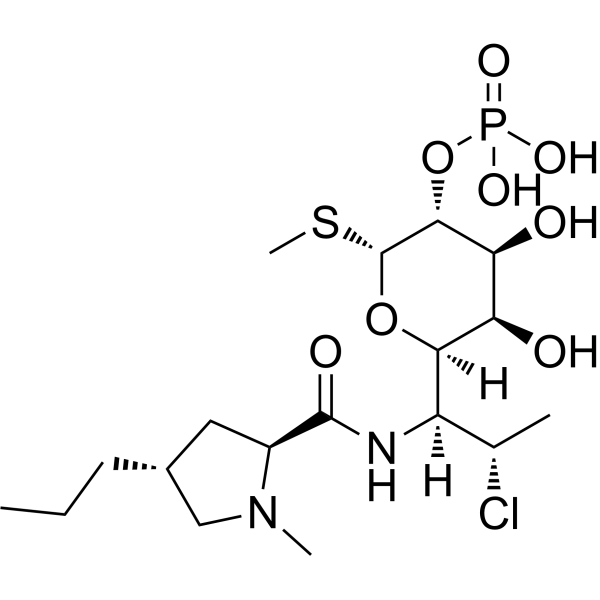 0 ImagesSynonyms: Clindamycin 2-phosphate (Standard); U-28508 (Standard)Clindamycin phosphate (Standard) is the analytical standard of Clindamycin phosphate. This product is intended for research and analytical applications. Clindamycin phosphate (Clindamycin 2-phosphate) is a broad-spectrum bacteriostatic lincosamide antibiotic. Clindamycin phosphate is the proagent of Clindamycin (HY-B1455) with no antimicrobial activity in vitro but can be rapidly converted in vivo to the active parent agent, Clindamycin, by phosphatase ester hydrolysis. Clindamycin phosphate can be used for researching acne and bacterial vaginosis.
-
DABCYL-Glu-Arg-Nle-Phe-Leu-Ser-Phe-Pro-EDANS
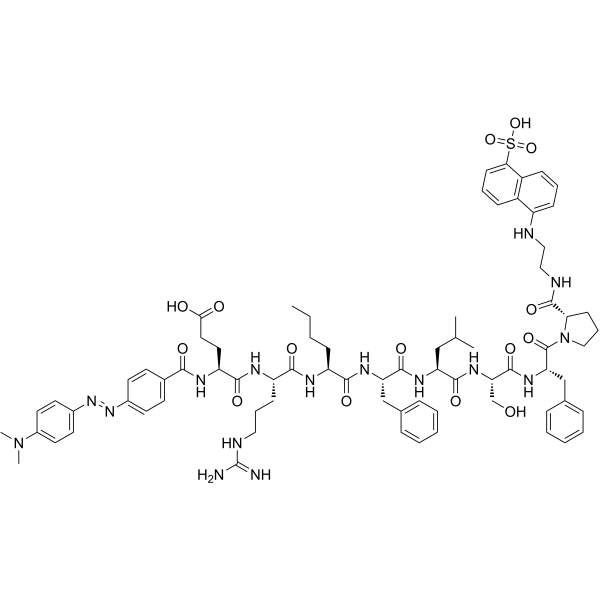 0 ImagesCat. No.: HY-D1532CAS No.: 263718-22-5DABCYL-Glu-Arg-Nle-Phe-Leu-Ser-Phe-Pro-EDANS is a fluorescent dye, and can be applied in a fluorogenic substrate for an aspartyl proteinase from human malaria parasite.
-
Naringenin 4',7-dimethyl ether
 0 ImagesSynonyms: NRG-DMNaringenin 4',7-dimethyl ether, Naringenin (HY-N0100) derivative is an anti-seizure agent. Naringenin 4',7-dimethyl ether attenuates pentylenetetrazole-induced seizures in larval zebrafish and reduces seizures in the mouse 6-Hz psychomotor seizure model. Naringenin 4',7-dimethyl ether can be used for the research of epilepsy. Naringenin 4',7-dimethyl ether is an active agent against Leishmania mexicana (17.8 µM) and Trypanosoma brucei (17.5 µM).
-
Antiparasitic agent-17
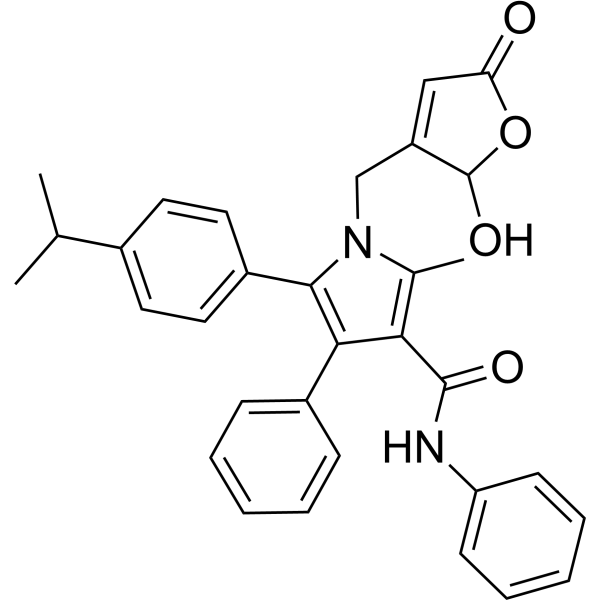 0 ImagesCat. No.: HY-149960CAS No.: 3043821-43-5Antiparasitic agent-17 (compound 5u) is an orally active antiparasitic agent. Antiparasitic agent-17 inhibits Chloroquine sensitive (Pf3D7) and Chloroquine resistant (PfK1) strain with IC50s of 0.96 μM and 1.67 μM, respectively.
-
trans-Clopenthixol dihydrochloride (Standard)
 0 ImagesSynonyms: (E)-Clopenthixol dihydrochloride (Standard)trans-Clopenthixol (dihydrochloride) (Standard) is the analytical standard of trans-Clopenthixol (dihydrochloride). This product is intended for research and analytical applications. trans-Clopenthixol ((E)-Clopenthixol) dihydrochloride is an antibiotic agent, without neuroleptic effect. trans-Clopenthixol can be used to inhibit Pseudomonas aeruginosa and Plasmodium falciparum in vitro[1][2].
-
Antiparasitic agent-5
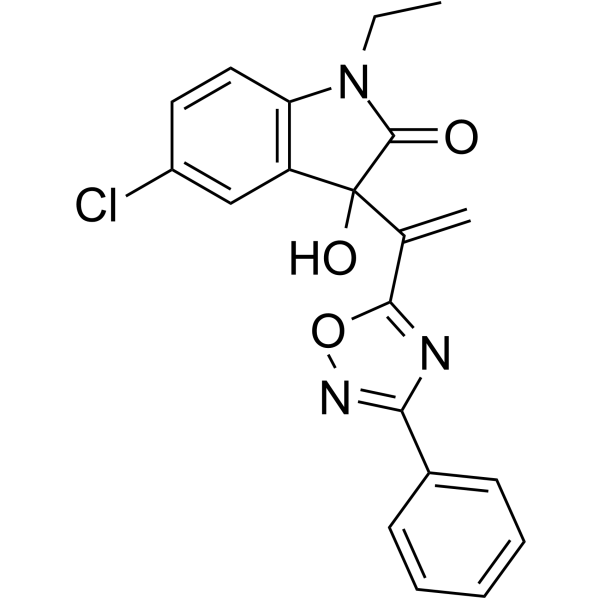 0 ImagesCat. No.: HY-146043CAS No.: 2494276-55-8Antiparasitic agent-5 (compound 8h) has selectively antiparasitic activity against Leishmania infantum (L. infantum) with an IC50 value of 2.50 μM. Antiparasitic agent-5 also has certain cytotoxicity against HepG2 (CC50 = 6.78 μM).
-
Isatropolone A
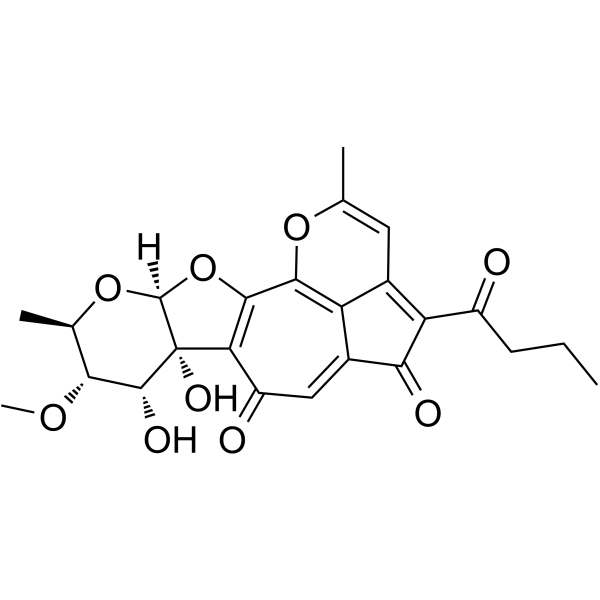 0 ImagesCat. No.: HY-130993CAS No.: 2097813-40-4Isatropolone A, a natural product containing a 1,5-diketone moiety, is reisolated from Streptomyces Gö66. Isatropolone A shows potent activity against Leishmania donovani with an IC50 of 0.5 μM.
-
Nyasol
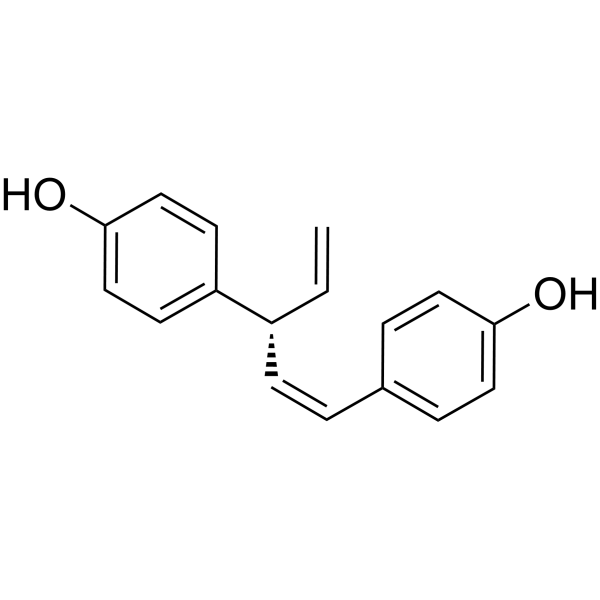 0 ImagesCat. No.: HY-138050CAS No.: 96895-25-9Synonyms: (-)-Nyasol; (Z)-Hinokiresinol; cis-HinokiresinolNyasol ((-)-Nyasol) is an active compound that has antifungal, antibacterial, antileishmanial, hyaluronidase inhibition activities. Nyasol inhibits LTB4 binding to human neutrophils. Nyasol suppresses neuroinflammatory response through the inhibition of I-κB degradation in LPS (HY-D1056)-stimulated BV-2 microglial cells.
-
Pefloxacin (Standard)
 0 ImagesCat. No.: HY-B0147RCAS No.: 70458-92-3Synonyms: Pefloxacinium (Standard)Pefloxacin (Standard) (Pefloxacinium (Standard)) is the analytical standard of Pefloxacin (HY-B0147). This product is intended for research and analytical applications. Pefloxacin (Pefloxacinium) is a broad spectrum antibiotic. Pefloxacin blocks DNA replication by inhibiting DNA gyrase. Pefloxacin inhibits DNA relaxation catalyzed by topoisomerase I with an IC50 of 45 μg/mL. Pefloxacin exhibits antibacterial activity against Escherichia coli, Pseudomonas aeruginosa, and Bacteroides fragilis with MIC90s of 0.12, 4, and 16 mg/L, respectively. Pefloxacin has anti-Plasmodium yoelii infection activity. Pefloxacin increase UVA-induced edema and immunesuppression. Pefloxacin can be used for infection studies.
-
Isogarcinol
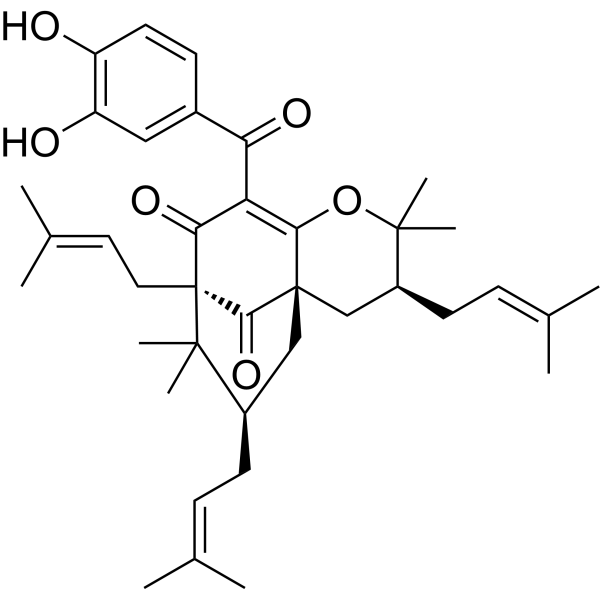 0 ImagesCat. No.: HY-127087CAS No.: 71117-97-0Synonyms: Cambogin
-
DL-threo-PPMP hydrochloride
 0 ImagesDL-threo-PPMP hydrochloride is an inhibitor of sphingosine synthetase in Plasmodium falciparum. DL-threo-PPMP hydrochloride inhibits the activity of sphingosine synthetase (sphingosine synthetase) by binding to a substrate that mimics sphingosine. This inhibition leads to a rapid decline in sensitive sphingomyelin synthase (SSS) activity, selectively disrupting the interconnected tubular network of TVM in the cytoplasm of the host cell, and this inhibition also blocks the proliferation of the parasite. DL-threo-PPMP hydrochloride can be used in the study of malaria parasite biology and the search for new antimalarial strategies.
-
Rafoxanide-13C6
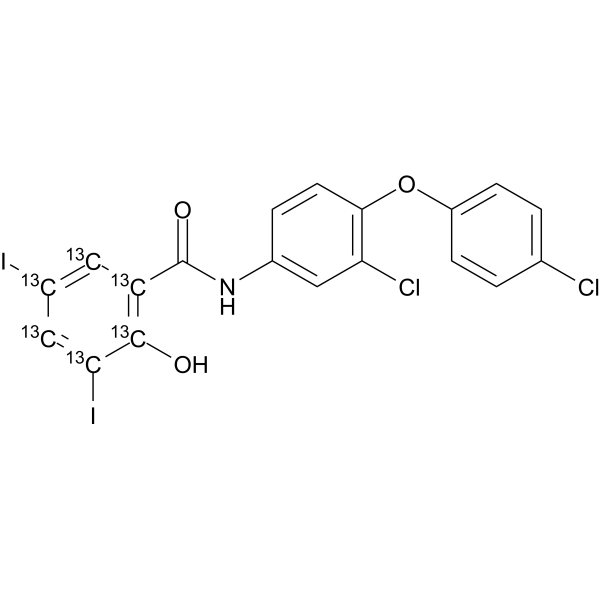 0 ImagesCat. No.: HY-17598SCAS No.: 1353867-98-7Rafoxanide 13C6 is a labeled Rafoxanide (HY-17598). Rafoxanide is a salicylanilide used as an antiparasitic agent.
-
Antimalarial agent 10
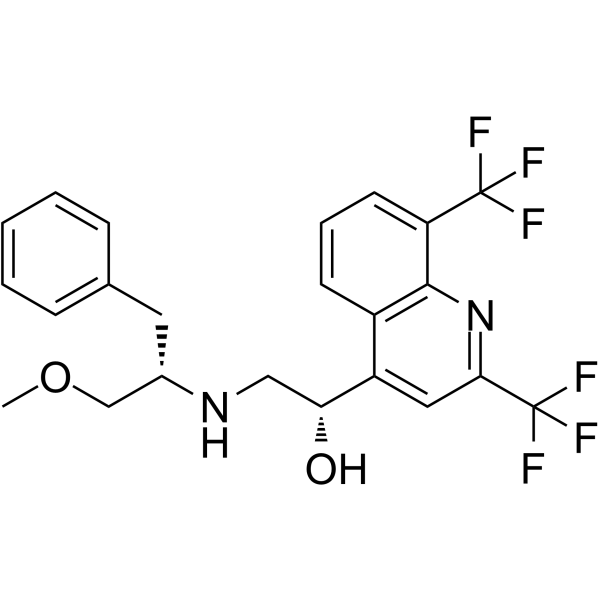 0 ImagesCat. No.: HY-143409CAS No.: 2747280-03-9Antimalarial agent 10 (Compound 17b) is an aminoalcohol quinoline compound. Antimalarial agent 10 is an antimalarial agent with IC50 values of 14.9 nM and 11.0 nM against respectively Pf3D7 and PfW2 and a selectivity index higher than 770 whatever the cell line is.
-
Rafoxanide (Standard)
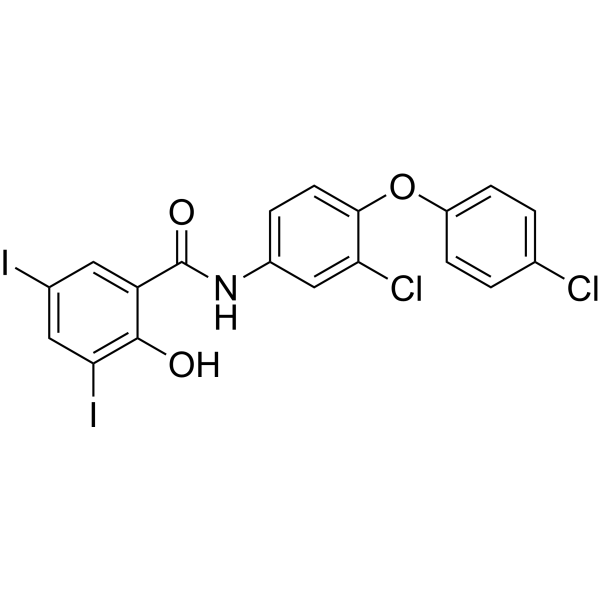 0 ImagesRafoxanide (Standard) is the analytical standard of Rafoxanide. This product is intended for research and analytical applications. Rafoxanide is a poent, orally active halogenated salicylaniline agent with antiparasitic activity. Rafoxanide interferes with energy metabolism in trematodes by uncoupling oxidative phosphorylation. Rafoxanide is also found to be a potent inhibitor of the BRAF V600E mutant protein, which is important in colorectal cancer. Rafoxanide can be used for the control of infestation with Hemonchus species or Fasciola species in sheep and cattle as well as Oestrus ovis in sheep. Rafoxanide can also be used for cancer research.
-
Piperonyl butoxide (Standard)
 0 ImagesPiperonyl butoxide (Standard) is the analytical standard of Piperonyl butoxide. This product is intended for research and analytical applications. Piperonyl butoxide (ENT-14250) is a pesticide synergist and food additive. Piperonyl butoxide has adverse effects on reproduction, development and behavior in mice. Piperonyl butoxide can activate c-Jun and ATF-2 in mouse hepatocytes. Piperonyl butoxide is a liver cancer carcinogen in rats and mice.
-
Secnidazole hemihydrate
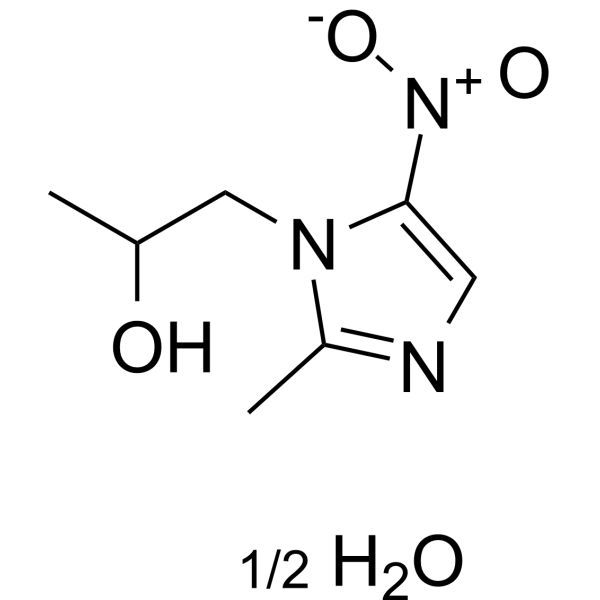 0 ImagesCat. No.: HY-B1118ACAS No.: 227622-73-3Synonyms: RP-14539 hemihydrate; PM-185184 hemihydrateSecnidazole (RP-14539) hemihydrate is an orally active azole antibiotic and a imidazole mitigator of Serratia marcescens virulence. Secnidazole hemihydrate, as an analog of acylhomoserine lactones, effectively inhibits QS resulting in the attenuation of Pseudomonas aeruginosa pathogenesis. Secnidazole hemihydrate has antimicrobial activity against many anaerobic Gram-negative and Gram-positive bacterial species in vitro. Secnidazole hemihydrate can be used for the research of various diseases, such as amoebiasis and giardiasis, and bacterial vaginitis.
-
Dihydroergotamine-d3
 0 ImagesCat. No.: HY-B0670SDihydroergotamine-d3 is the d3-labeled Dihydroergotamine (HY-B0670). Dihydroergotamine (DFN-19) is a blood-brain barrier-permeable semi-synthetic ergot alkaloid, acting as a full agonist of 5-HT1B/1D receptors (Ki values of 0.3 nM and 2.5 nM, respectively; functional IC50 values of 2 nM and 2.2 nM, respectively). Dihydroergotamine inhibits Forskolin (HY-15371)-stimulated cAMP accumulation, possesses α-adrenergic receptor antagonistic activity and weak dopaminergic agonistic activity. It mediates intracranial cerebrovascular contraction, inhibits the release of neuropeptides such as CGRP/substance P, and suppresses neurogenic inflammation by activating 5-HT1B/1D receptors in the trigeminovascular system. Dihydroergotamine binds to the catalytic site of Trypanosoma cruzi trypanothione reductase and exhibits trypanocidal activity in vitro. Dihydroergotamine can be used in studies related to migraine and trypanosome infections.
-
Niclosamide (GMP)
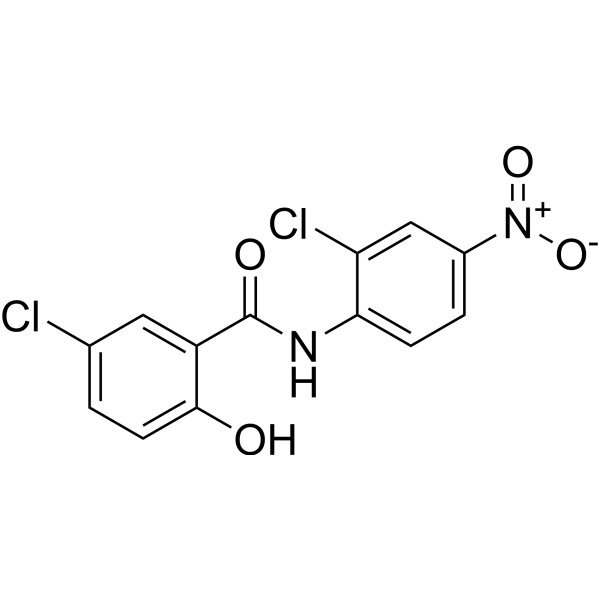 0 ImagesNiclosamide (GMP) is Niclosamide (HY-B0497) produced by using GMP guidelines. GMP small molecules work appropriately as an auxiliary reagent for cell therapy manufacture. Niclosamide (BAY2353) is an orally active antihelminthic agent used in parasitic infection research. Niclosamide is a STAT3 inhibitor with an IC50 of 0.25 μM in HeLa cells. Niclosamide has biological activities against cancer, inhibits DNA replication in Vero E6 cells.
-
Ludaconitine
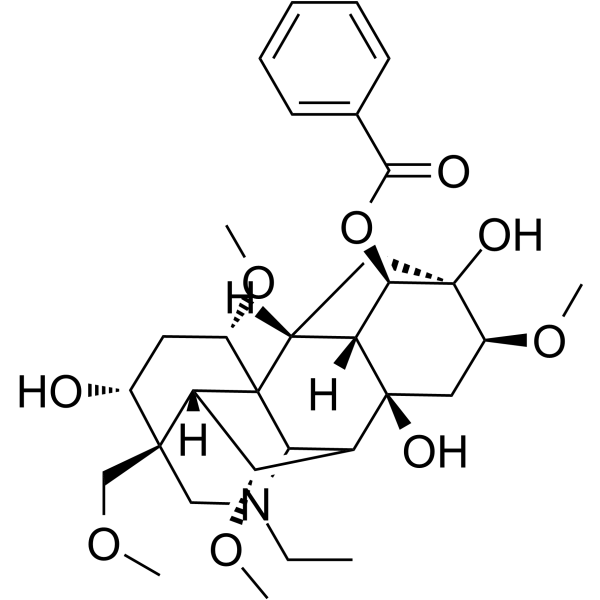 0 ImagesLudaconitine, isolated from Aconitum spicatum (Bruhl) Stapf, exhibits antileishmanial activity with an IC50 of 36.10 μg/mL.
-
Antimycobacterial agent-4
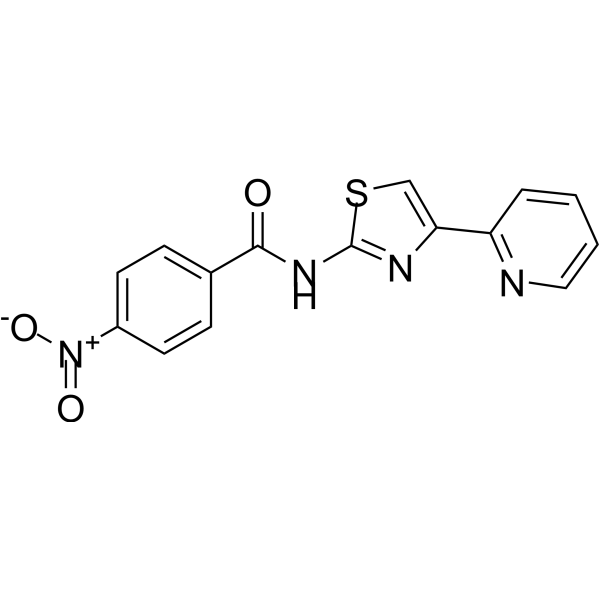 0 ImagesAntimycobacterial agent-4 is a 2-amino-4-(2-pyridyl) thiazole derivative, with antimycobacterial activity, antiplasmodial activity, and cytotoxicity on a mammalian cell line.



